By Richard Owen & Maurice FitzGerald
Field Notes on Customer AI · Edition 007 · June 9, 2026
Each Tuesday, Field Notes surfaces what we're seeing in the field: patterns from implementations, ideas worth stress-testing, and the occasional inconvenient truth about how Customer AI programs succeed or stall. No abstractions. No product pitches. Just the working knowledge that tends to matter.
This edition covers a better way of gaining customer insights than either surveys or personal intuition.
The Field Read
A Better Solution - Richard Owen
For the better part of three decades, the customer experience industry has operated on a straightforward premise: ask customers what they think, measure their responses, use the results to improve. The methodology evolved, from satisfaction scores to NPS to journey mapping to real-time feedback, but the foundation remained constant. Survey the customer. Analyze the data. Act on the findings.
I co-developed the NPS methodology, and spent years building a company around the conviction that measuring customer loyalty was the key to driving business performance. NPS was never wrong in what it set out to do. It gave companies a common language for loyalty that crossed functional boundaries and made sentiment legible to finance and the board. It changed how companies thought about their customers.
The premise it rests on, however, has eroded to the point where pretending otherwise is no longer intellectually honest. Surveying a fraction of your customers does not tell you something reliable about all of them. Response rates in B2B now sit between two and eight percent. The customers who respond skew toward the satisfied and the engaged. The silent majority controls the majority of revenue and represents the majority of risk. They are entirely absent from the data.
What replaces surveys is not a better survey. It is a fundamentally different approach that does not depend on the customer volunteering their opinion. Every customer leaves a continuous trail of behavioral signals: usage patterns, engagement rhythms, purchasing behavior, the frequency and tone of communications. These signals cover every customer, not just the vocal minority. They look forward, not backward. And they can tell you not just that an account is at risk, but specifically why and what would change the trajectory.
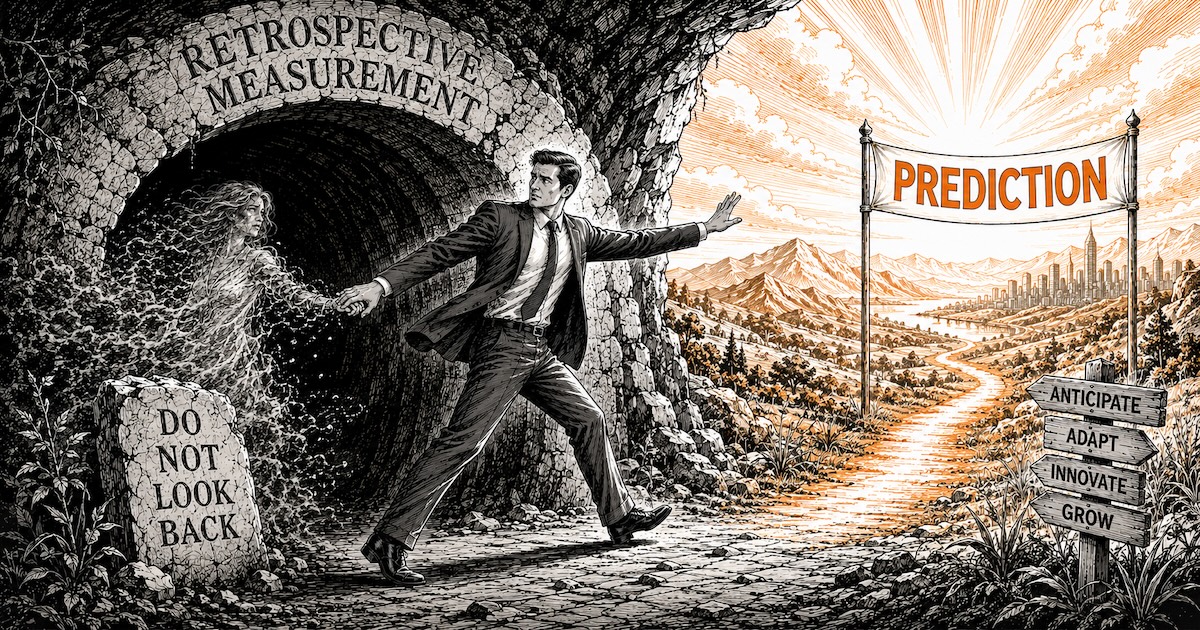
The shift is from asking to observing, from retrospective to predictive, from partial to complete. In the myth of Orpheus and Eurydice, Orpheus is granted permission to lead his wife out of the underworld on one condition: do not look back. He cannot resist. He looks. She vanishes. There is something of Orpheus in organizations that keep returning to their survey dashboards for reassurance while the ground shifts beneath them. The backward glance feels like prudence. It is actually the thing that costs you what you are trying to keep.
[Read the full article: "Bad Survey Data or Pure Guesswork? A Better Solution to Both" →Here]
The Practitioner's Take
We were doing it well and it was still not enough - Maurice FitzGerald
I spent years at HP building what I believed was a best-in-class CX measurement program. NPS benchmarks. Quarterly reviews. Driver analysis. Closed-loop processes. By the standards of the industry, it was thorough. And yet the results I have described throughout this series kept repeating: leadership listened politely and moved on; the customers who left were the ones we never heard from; the data always arrived too late.
The harder conclusion took me longer to reach. We were not doing CX measurement badly. We were doing it well, and it was still not enough. The model itself was the constraint, not our execution of it. That is a difficult thing to accept when your career has been built on making the model work.
So therefore: if you run a CX program today, ask yourself one question. Is your program telling you what your customers thought last quarter, or what they are about to do next quarter? If the honest answer is the first, the program is not broken. It has reached the limit of what backward-looking measurement can deliver. The next step is forward.
The Field Tactic
Three steps toward forward-looking intelligence
- Audit what your program can actually see. List every customer. Mark the ones who responded to your last survey. For the customers who did not respond, ask: what do we know about their trajectory? If the answer is nothing, that is the gap your next investment should close.
- Identify three behavioral signals you already have. Login frequency, support ticket patterns, executive engagement cadence: these exist in systems you already own. Track them for your top fifty accounts alongside your survey data for one quarter. The behavioral signals will tell you things the survey cannot.
- Present one forward-looking finding at your next executive review. Surface one account whose behavioral trajectory suggests risk or opportunity that your survey data did not flag. One concrete example changes the conversation more effectively than any deck about methodology.
The Data Point
The Number - The 94% You Cannot See:
94%
That is the share of your customer base whose sentiment your current survey program cannot see, based on average B2B response rates of six percent. This is the number the series began with. It is also the number it ends on.
The question was never whether six percent of your customers can tell you something useful. They can. The question is what you do about the other ninety-four percent. Research by Bain and OCX Cognition shows that non-respondents score significantly lower, churn at higher rates, and control the majority of revenue. The assumption that the six percent are representative is not just unproven. It is demonstrably wrong.
Source: OCX Cognition customer survey analysis.
The Iconoclast Question
What would you do differently on Monday if...
This issue was the last in a series of six on customer experience in the age of AI, and here is the last question in that series: If you could see what every customer was about to do, not just what a fraction of them said they felt, what would you do differently on Monday?
The Field Bridge
The Customer AI Masterclass covers everything this series has argued: from why surveys broke to what replaces them. Start with any module.
Coming in Future Editions
- The Survey Platform Reckoning.
- Why Culture Eats Customer AI for Breakfast.
- Enterprise AI Is Failing the Same Way Enterprise IT Always Did.
- Why NPS was never enough, and what replaces it.
- The Executive Sponsorship issue.
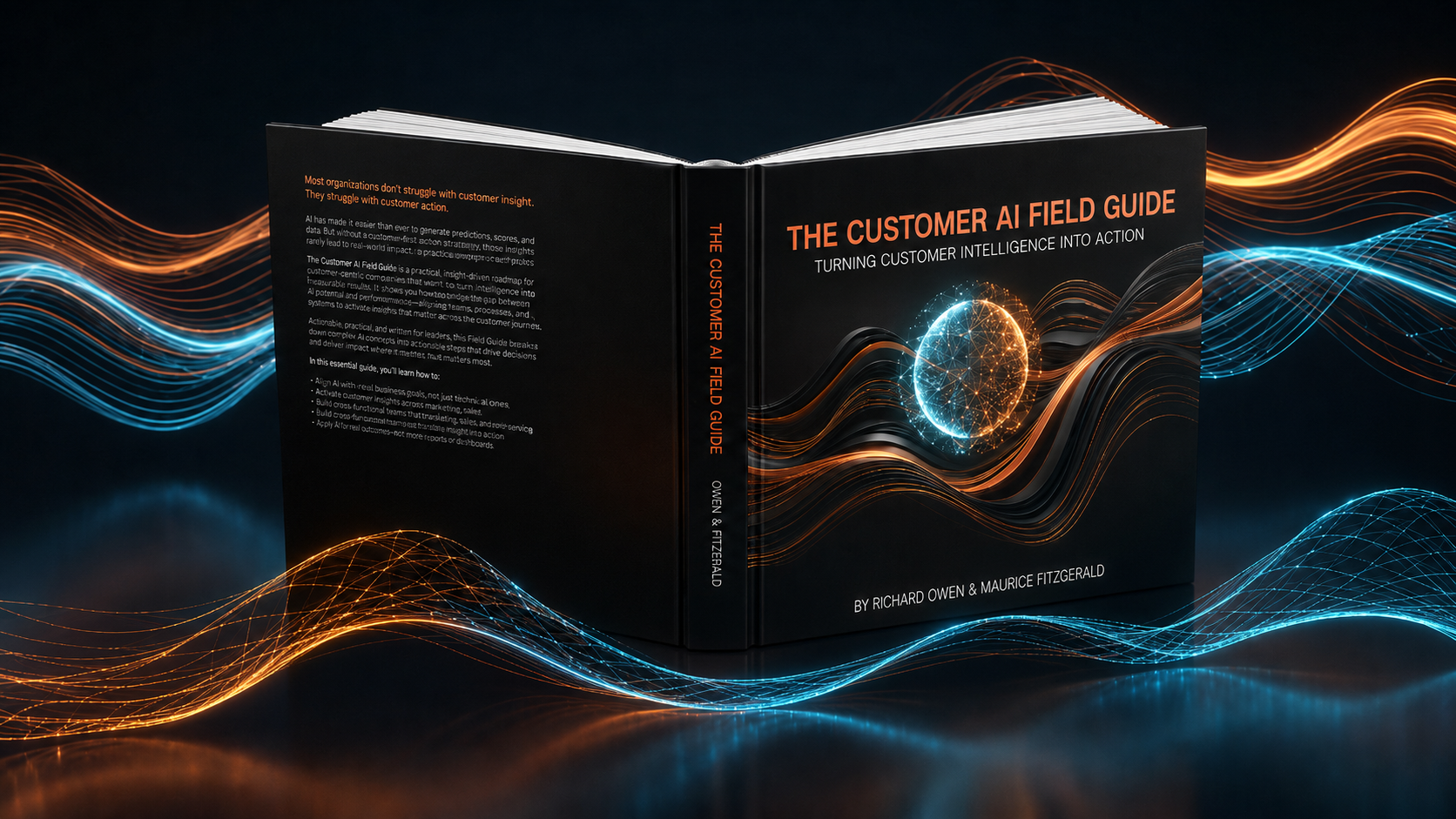
If you've been reading Field Notes, you know the problem isn't awareness - it's execution. Knowing that AI can improve retention or accelerate revenue doesn't tell you how to make it happen in your organisation. That's exactly the gap The Customer AI Field Guide was written to close. Authored by Richard Owen and Maurice FitzGerald (that's us), it's a practical execution guide for CX, CS, and RevOps leaders, covering how to identify at-risk accounts before they signal churn, convert customer insights into frontline action, build the financial case that gets CFO sign-off, and design Customer AI systems your teams will actually adopt. Theory optional. Results required.
[ Get the Customer AI Field Guide → Now on Amazon]
Field Notes publishes every Tuesday. Each edition focuses on one topic - a trap, a framework, a field observation, or a pattern worth examining. If something in here resonates, or if you're seeing something different in your own programs, we'd like to hear about it.

Responses