NO. 023 · OCTOBER 6, 2026 · THE GREAT SORTING
This week, The Great Sorting puts two things through the same test: a private equity bet on customer success, and the service decisions that leave both the company and its customers worse off.

Vista Has Owned Gainsight for Five Years and Ten Months
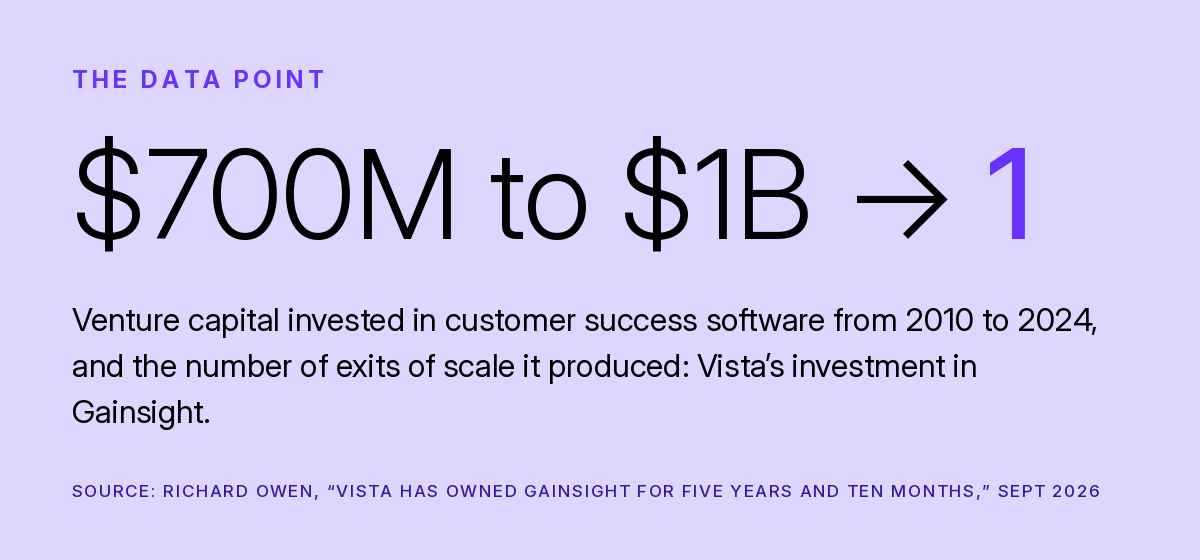
In November 2020, Vista took a majority stake in Gainsight at about $1.1 billion, in effect a bet that customer success headcount would keep growing. Nearly six years into a typical three to seven year hold, that headcount is shrinking, and every seat removed is revenue removed. Thoma Bravo and Medallia have already shown how this template can end. Enterprises renewing CS budgets can read the pattern before the write-down.
The Cipolla Model of Stupid Customer Experience
Most service debates run on a scale from good to bad, and it is the wrong scale. Borrowing the economic historian Carlo Cipolla's four outcomes, a decision is intelligent when both parties gain and stupid when both lose. The clearest case: a bank whose fraud rules blocked legitimate payments until customers left. The savings landed in one budget, the lost revenue in another, and nobody was measured on the gap.


This week's two articles share a method more than a subject. Cipolla's grid asks one checkable question of any decision: did it leave both parties better off, one of them, or neither? The Vista piece asks the same question of a whole category, and the capital markets have answered it plainly: fifteen years of investment, one exit of scale, and a return maintained largely on the industry's own testimony.
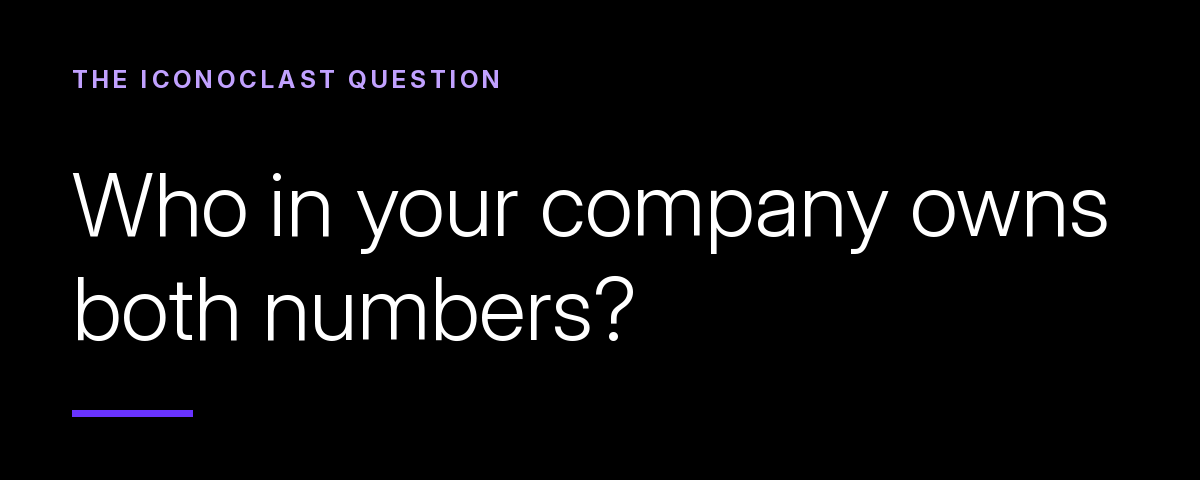
What hides the fourth box is the same in both cases. The bank's fraud team was measured on fraud, and nobody was measured on the customers who moved their salary elsewhere. In customer success, the cost of a team sized for 2020 sits in one budget, while the retention it was meant to protect is reported somewhere else, later, and is rarely traced back.
So the useful exercise for an enterprise account base is to put this year's customer spending through the grid, line by line, and be honest about where each line lands.
Seeing this in your own account base? Reply to this email.

- Put every service cut through the four-box test. Before approving it, estimate what it saves and what it puts at risk in customer lifetime value. If the second number is larger, the cut is stupid in Cipolla's technical sense.
- Trace your last ten lost accounts back to a rule. Look upstream for a policy, threshold or process change that preceded each departure. The owner of that rule is rarely the person measured on the loss.
- Price your CS renewal against the team you will actually have. Model the headcount if routine health scoring, risk triage and QBR preparation were automated, then ask whether a per-seat contract still makes sense.

OCX Cognition's Customer AI Analyst looks across your whole account base and shows which accounts are drifting, and why, while acting is still cheap. If you'd like to see what that looks like on your own data, we'll walk you through it.

Get the Customer AI Field Guide on Amazon →
Learn more about the Customer AI Masterclass →
Until next week,
Richard Owen
Co-founder and CEO, OCX Cognition
Joined and then led the team that co-created NPS.
Know someone who should read this? Forward it, or they can subscribe here

Responses