NO. 026 · OCTOBER 27, 2026 · THE GREAT SORTING
This week, The Great Sorting looks at two kinds of efficiency that get credited as value: a celebrated private equity win, and the AI programs in support and success that lose the people they depend on.
🟣 THIS WEEK IN THE FIELD
Vista Made $3 Billion on Marketo. A HubSpot Shareholder Did Just as Well Without Lifting a Finger.
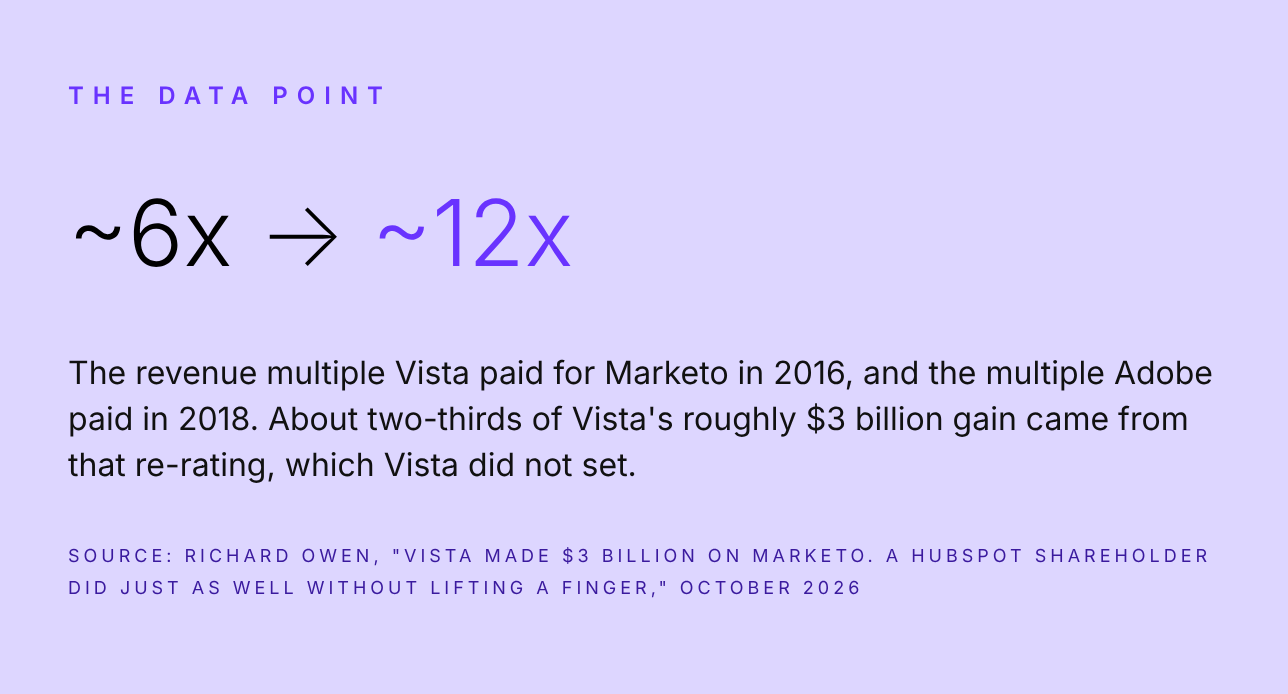
Vista won Marketo in 2016 by 20 cents a share and made about $3 billion selling it to Adobe two years later. Put the market next to that return and most of the value creation disappears. About two-thirds came from a doubled software multiple, the rest from growth, with debt on top. A shareholder who took Vista's cash and bought HubSpot did just as well.
The Efficiency Trap
Every efficiency program in support and customer success hits the same wall, and it isn't the technology. Careers in these functions are built by growing teams, and the program asks leaders to run smaller ones. That's a principal-agent problem, not resistance to change. The best performers read it first and leave first. And the CX function that should be measuring all of this is rarely in the room.
MORE THIS WEEK
The Bank That Needed the Number to Be True
🟣 THE BREAKDOWN
Both of this week's articles are about efficiency that gets reported as value. Vista took Marketo from roughly minus $50 million of EBITDA to positive, and the deal is still cited as proof of what ownership adds. Over the same years HubSpot, the same size in 2016, nearly doubled its revenue while Marketo grew about 40 percent.
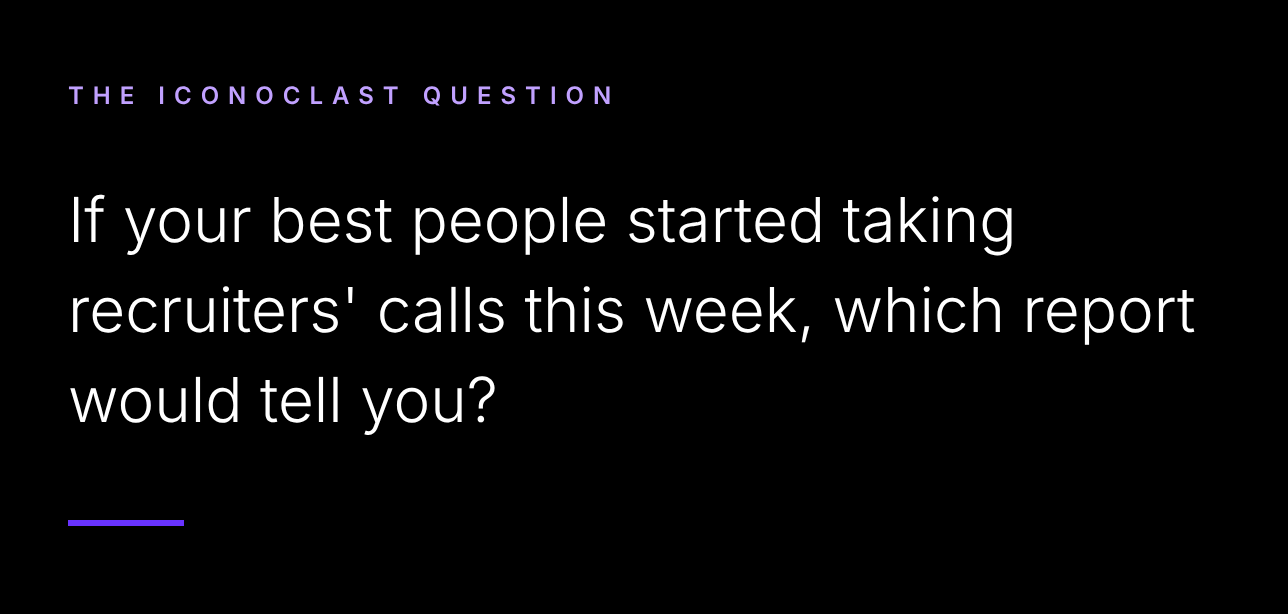
The common failure is the missing benchmark. Vista's return looks like operating skill until you set it next to the nearest public comparable. An efficiency program looks like a success until you set it next to what the organization lost: the pattern recognition that walked out with the people who had options. Neither cost appears in the report the sponsor reads.
Inside an enterprise account base, the benchmark is the customers. Which accounts are getting less attention since the team shrank, and is their behavior changing? Which renewals depend on a representative who might leave? That is the analysis a CX function should own, and it can't come from a survey built in 2015.
Seeing this in your own account base? Reply to this email.
🟣 THE FIELD TACTIC
Three ways to check an efficiency program against the right benchmark
- Set the comparison before you claim the gain. Pick a team, region or account group that didn't change, and track it alongside the program. If the comparison moved by the same amount, the program didn't do it.
- Track who leaves, not just how many. Flag departures among your most experienced representatives and CSMs, and map the accounts they handled, before the next renewal cycle maps them for you.
- Measure the accounts, not just the tools. Adoption and handle time tell you how the tool is doing. Usage, escalations and renewal signals on the affected accounts tell you how the customers are doing. Report both to the sponsor.
🟣 FOR ENTERPRISE TEAMS
OCX Cognition's Customer AI Analyst reads every account in your base from what customers do as well as what they say, so an efficiency program can be judged on what happens to the customers, not just the tool. It shows which accounts are at risk, and why, before they decide to leave. If you'd like to see it on your own data, we'll walk you through it.
🟣 GO DEEPER
The Customer AI Field Guide is a practical guide for CX, CS and RevOps leaders on turning customer intelligence into revenue action.
The Customer AI Masterclass is a self-paced certification, 8 modules over about 8 hours, where you earn both NPS® Certification and Customer AI Certification. Learn more.
Learn more about certification →
Until next week,
Richard Owen
Co-founder and CEO, OCX Cognition
Joined and then led the team that co-created NPS.
Know someone who should read this? Forward it, or they can subscribe here
Responses