NO. 025 · OCTOBER 20, 2026 · THE GREAT SORTING
This week, The Great Sorting looks at two deals that assumed the customers came with the purchase: private equity's software buyouts and JPMorgan's rescue of First Republic.
🟣 THIS WEEK IN THE FIELD
Private Equity Bought Switching Costs and Priced Them as Loyalty
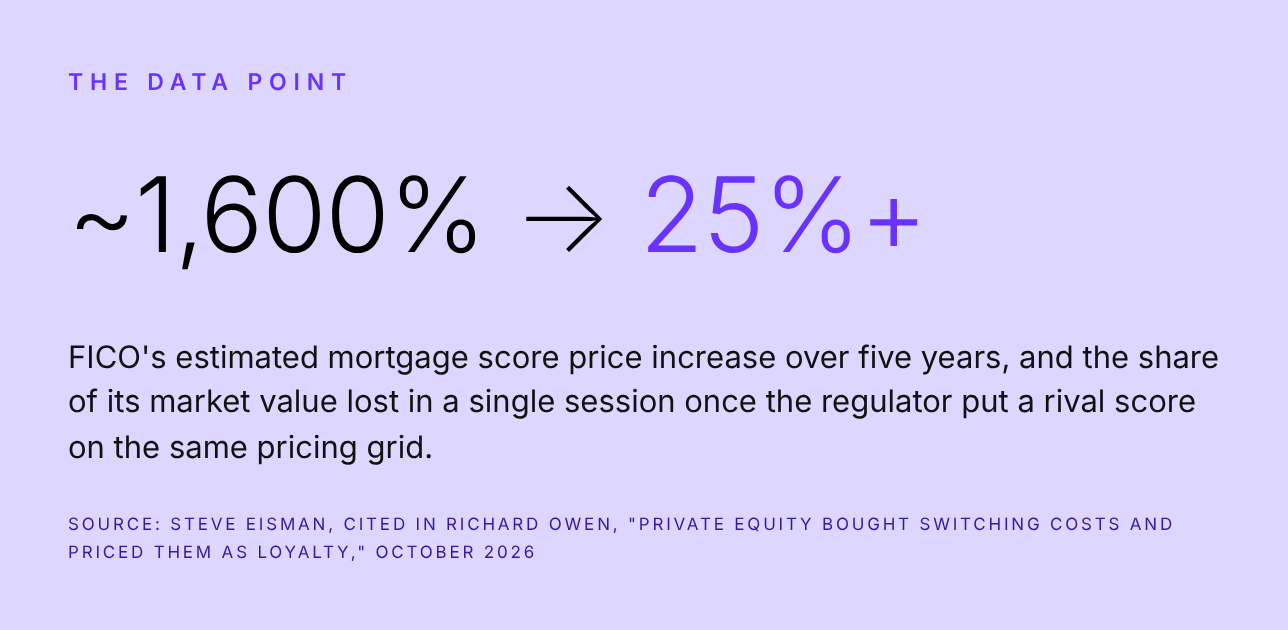
Steve Eisman says private equity's software bet is heading to zero. The arithmetic is right. But a deal model can't tell earned revenue from captive revenue, because both show up as 95 percent retention. FICO shows what happens when an alternative arrives: years of price rises, then a quarter of its value gone in a session. AI's real threat isn't replacing software. It's lowering the cost of leaving.
The Best Bank JPMorgan Ever Bought
JPMorgan rescued First Republic in 2023 with more capital, technology and product than the failed bank could ever have offered. Eighteen months on, retention of its wealth advisors and their clients had slipped from 90 percent to about 75, and more than 110 advisors had left. Loss aversion explains it: customers feel what they lose about twice as much as what they gain. Deal models don't price that in.
MORE THIS WEEK
B2B Never Had a Sampling Problem
🟣 THE BREAKDOWN
This week's two articles are about buyers, and both describe the same assumption: that the customers come with the deal. Private equity modeled software revenue on retention without asking why customers stayed, and paid for lock-in as if it were loyalty. JPMorgan bought First Republic's relationships, the one part of the bank that worked, and still watched some of the most valuable ones walk.
The mechanics differ, but the moment is the same. Customers reconsider when something changes: an alternative arrives, or the relationship manager, fee schedule and phone number all change at once. Lock-in hides the first risk until a competitor removes it. Loss aversion makes the second count roughly twice.
Inside an enterprise account base, the lesson is to stop treating customers as a fixed asset. Whether you're buying, being bought or pricing a renewal, the question is which accounts stay because the product is worth it and which are waiting for a reason to go. The signals that answer it, falling usage, transactions moving elsewhere, shorter service contacts, are already in your systems.
Seeing this in your own account base? Reply to this email.
🟣 THE FIELD TACTIC
Three ways to see which customers are really staying
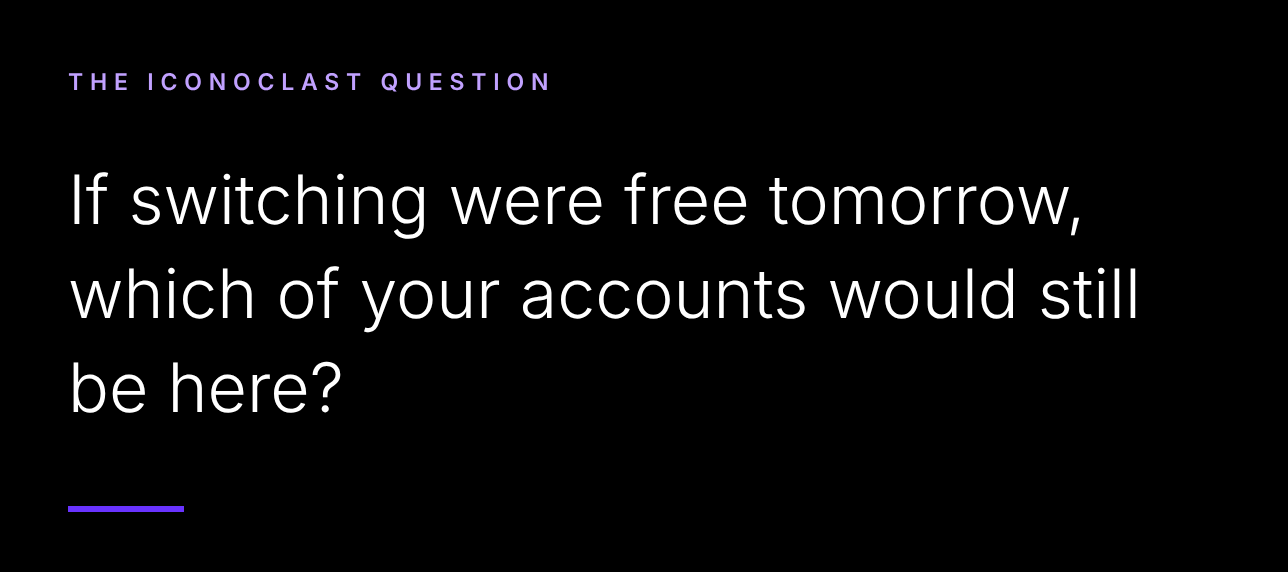
- Estimate what would stay if switching were free. Split renewing accounts into those whose usage and engagement are growing and those renewing while both flatten. The second group is your captive revenue, and it won't drift away. It will leave together.
- Baseline every account before a big change, not after. Before a merger, price rise or platform migration, record each account's usage and service pattern, so you can see who starts to drift within weeks rather than at the next annual survey.
- Treat a price rise on a captive account as a withdrawal. Before the next uplift, check which accounts will absorb it because of value and which because of migration cost. Only the first kind is pricing power.
🟣 FOR ENTERPRISE TEAMS
OCX Cognition's Customer AI Analyst reads every account in your base from what customers do as well as what they say, and shows which are at risk before they decide to leave. If you'd like to see it on your own data, we'll walk you through it.
🟣 GO DEEPER
The Customer AI Field Guide is a practical guide for CX, CS and RevOps leaders on turning customer intelligence into revenue action.
The Customer AI Masterclass is a self-paced certification, 8 modules over about 8 hours, where you earn both NPS® Certification and Customer AI Certification. Learn more.
Learn more about certification →
Until next week,
Richard Owen
Co-founder and CEO, OCX Cognition
Joined and then led the team that co-created NPS.
Know someone who should read this? Forward it, or they can subscribe here
Responses